Advertising photography is often described as "fake". Not real.
I would like to challenge that idea and even take it one step further.
Since there is no time contained within a photograph, a photograph is by definition not reality. After all, there is no reality without the dimension of time. At best, a photograph can be seen as a reflection of a small fragment of reality.
This has important consequences, particularly in advertising photography.
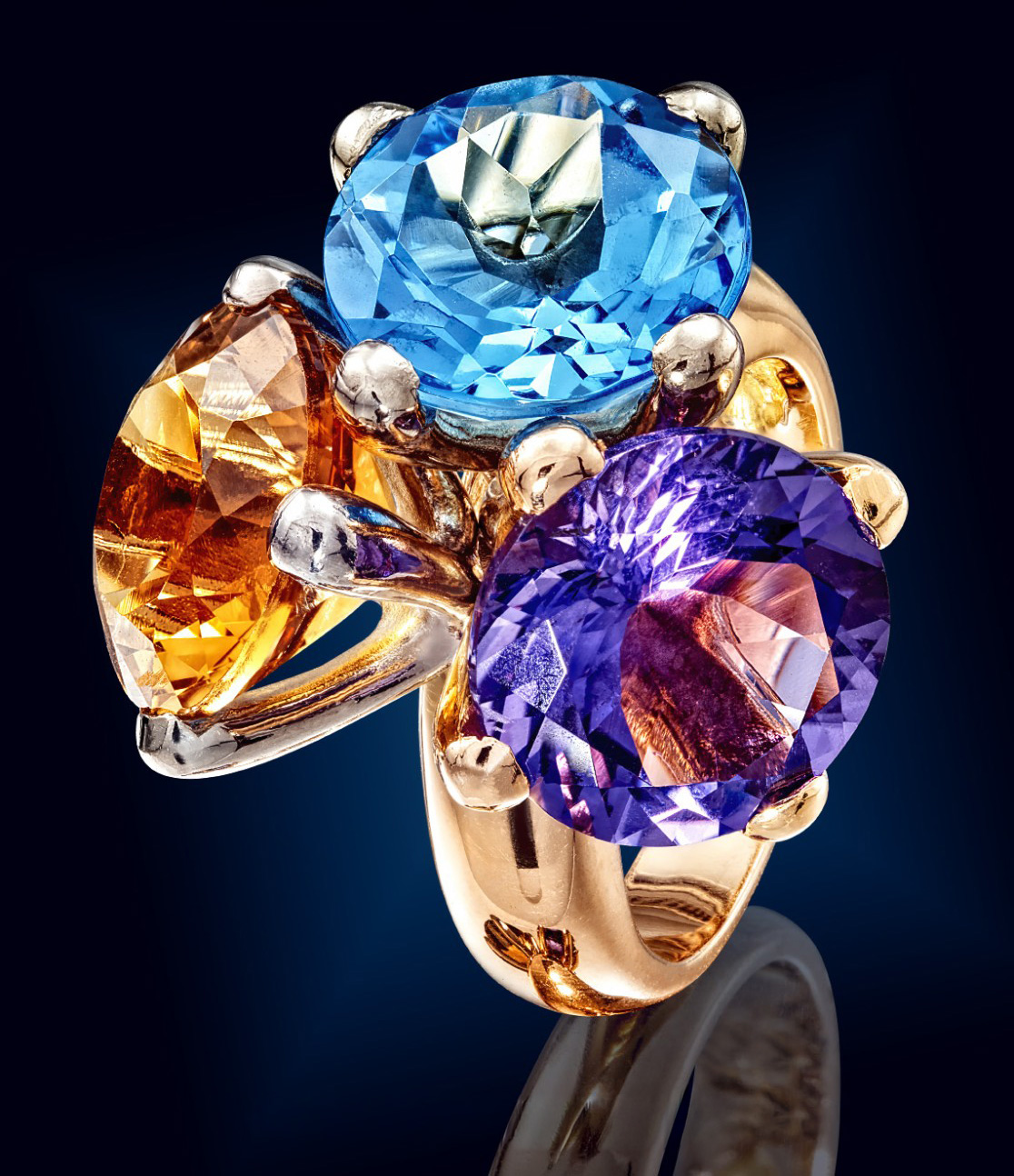
Take the ring shown above.
When you walk into a jewelry store and examine a ring in your hand, it sparkles under the focused lights above the counter. As you look at the ring, you naturally move it — even when you think you are holding it perfectly still.
As a result, you see the ring in hundreds or even thousands of different ways. Every angle creates a slightly different reflection, highlight or sparkle. On top of that, the human eye can perceive a far greater dynamic range than a camera.
As photographers, we are faced with an impossible task.
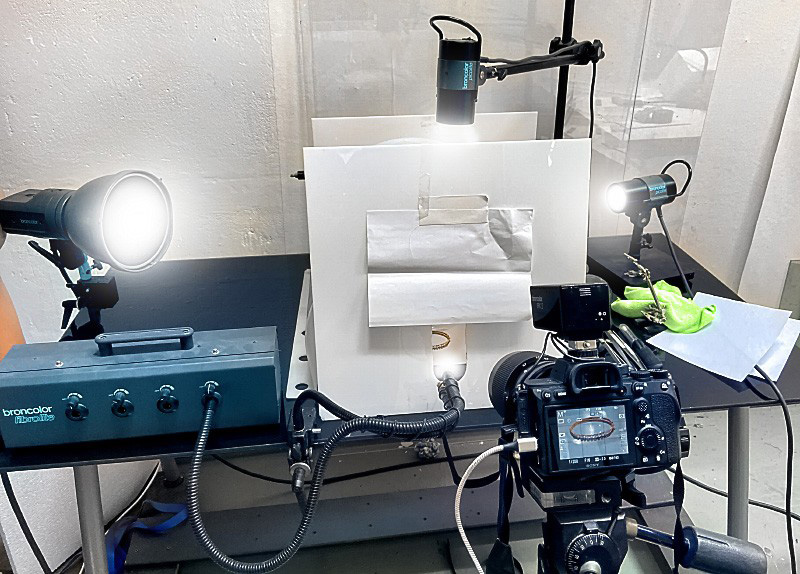
To compensate for these limitations, we must combine all those different viewpoints into a single image. We use large seamless softboxes, black flags, mirrors, miniature flash heads and extensive post-production.
Post-processing is necessary because the human eye has a much better perception of contrast than a camera. A camera, however, is far better at recording tiny details. Every dust particle, small scratch and dull spot becomes visible and must be carefully removed.
All of this effort serves a single purpose: to recreate, in a single photograph, the experience of viewing the ring at a jeweler's counter.
The final image is not reality. It is an attempt to preserve the experience of reality.